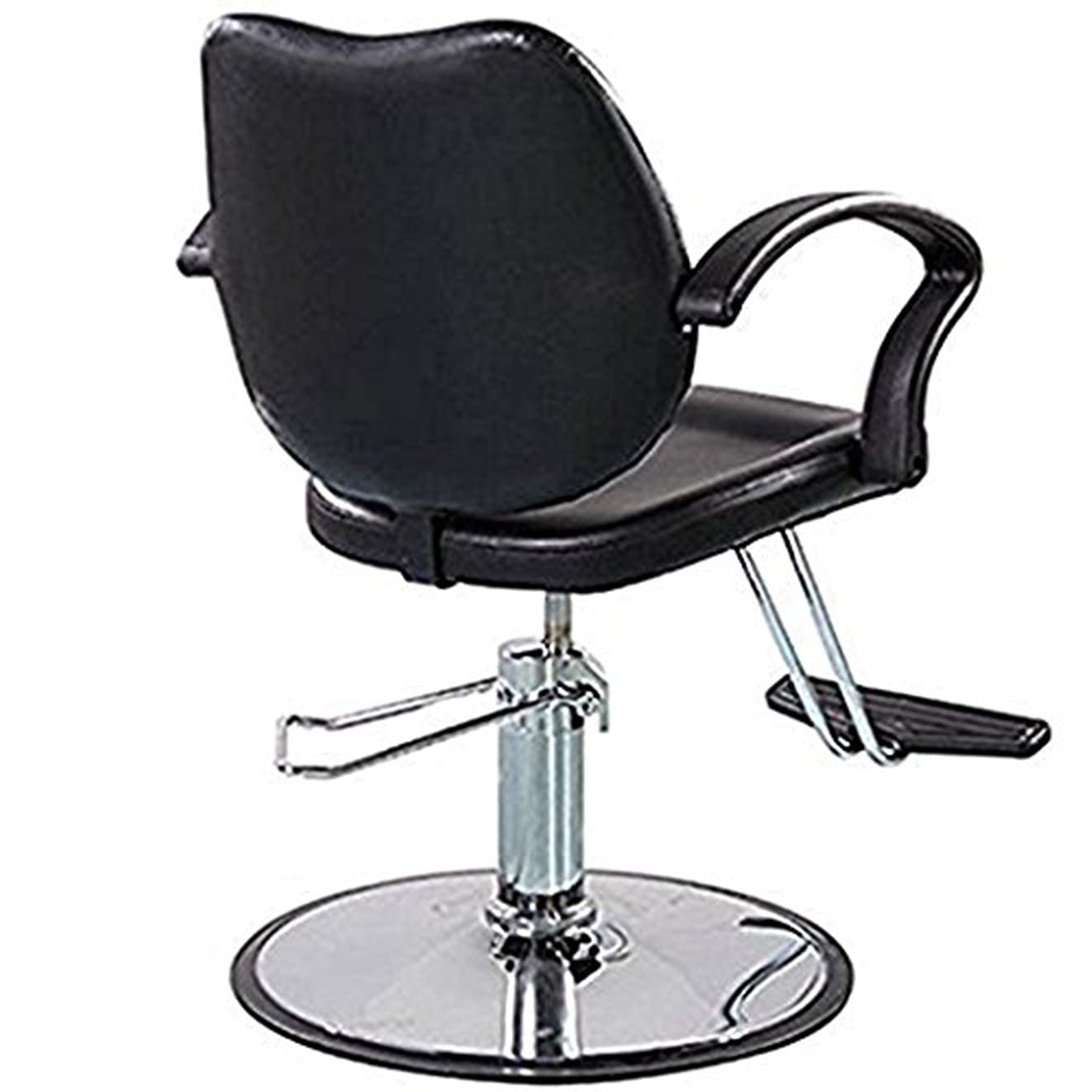
If you’ve ever shopped for a styling chair — the adjustable seat at the center of every stylist’s workstation, raised and lowered by a hydraulic pump (a sealed fluid-pressure mechanism built into the base) — you already know the price range is wild. You can spend $250 on a basic import or $6,000 on a Takara Belmont flagship, and both will hold a client and move up and down. What the spec sheet won’t tell you is which one actually costs less over a three-to-five-year service horizon, what the failure modes look like in a real working salon, and whether the brand name on the base changes your liability when the hydraulic seal fails at 18 months. That’s what this article is for. We’ll walk through the numbers, name the tradeoffs at each price tier, and give you a clear decision rule so you can close the chair question and move on to the rest of your buildout.
Why the Purchase Price Is the Wrong Number to Anchor On
Here’s the mistake most first-time buyers make: they divide the chair price by the number of months in a warranty period and call it their cost. That math ignores almost everything that matters.
A hydraulic styling chair in active service takes 20–40 full pump cycles per day in a busy single-stylist station — more if you’re running back-to-back color corrections with clients at different heights. Over a five-year working life, that’s somewhere between 36,000 and 73,000 pump cycles on the hydraulic column alone, not counting the swivel bearing load, the footrest pivot wear, and the cumulative stress on the base weld points.
Salon Today Magazine’s equipment investment guide notes that the industry average replacement cycle for entry-level imported chairs is 2.5 to 3 years in full-time use, versus 7 to 12 years for mid-to-premium domestic and Japanese-manufactured units — a gap that nearly doubles or triples the effective per-year cost of “saving” money at the low end.
By the numbers:
| Chair tier | Typical purchase price | Realistic working life (full-time) | Implied annual cost |
|---|---|---|---|
| Entry import (e.g., generic wholesale) | $250–$450 | 2–3 years | $83–$225/yr |
| Mid-range domestic/Korean-made | $600–$1,400 | 5–7 years | $86–$280/yr |
| Premium (e.g., Belvedere, Pibbs, Takara Belmont entry) | $1,500–$3,200 | 8–12 years | $125–$400/yr |
| Flagship (e.g., Takara Belmont Daiwa, Maletti) | $3,500–$6,500 | 12–20 years | $175–$542/yr |
The annualized spread between a mid-range and a flagship chair is smaller than most buyers expect — often under $200/year. What changes at the top of the range isn’t primarily the annual cost; it’s the variance. Flagship chairs fail less unpredictably, which matters more than the average cost when an unscheduled closure costs you a full book of appointments.
What “Hydraulic Pump Quality” Actually Means in Practice
The hydraulic pump is the heart of the chair, and it’s the component that separates price tiers more clearly than any other feature. Here’s what to look for when you’re reading a spec sheet or talking to a dealer.
Pump cylinder diameter and stroke length. A wider-diameter cylinder moves more fluid per pump stroke, which means less mechanical effort per height adjustment and less seal stress per cycle. Entry-level chairs typically spec pump cylinders in the 35–45mm range; mid-tier units run 50–60mm; premium and flagship chairs often use 65mm+ cylinders with chrome-plated internal surfaces. Manufacturers like Takara Belmont and Maletti publish these specs — ask your dealer to pull them if they’re not on the data sheet.
Seal material and replacability. Most hydraulic failures in chairs are seal failures — the rubber or polyurethane gaskets that keep fluid from bypassing the piston. Beauty Launch Pad’s maintenance guide distinguishes between “sealed unit” pumps (the entire hydraulic column is replaced as a single assembly, which is how most imports are built) and “serviceable” pumps (individual seals can be replaced, which is how Takara Belmont and Belvedere units are engineered). A sealed-unit pump that fails under warranty is fine; one that fails at month 25 — one month out of a 24-month warranty — means a $150–$350 column replacement versus a $25–$60 seal rebuild.
Weight rating vs. service weight. Most chairs are spec’d with a maximum weight capacity of 300–400 lbs. This is a static rating, not a dynamic one. The actual stress on a hydraulic column occurs when a client sits down with force or when the pump is actuated under load. Operators in long-run forum reviews on Behind the Chair consistently note that chairs used in barber-adjacent services (men’s grooming, textured hair styling with extended session times and heavier product use) show accelerated pump wear when run at 80%+ of rated capacity continuously. Practical rule: if your average client is over 200 lbs or you’re doing extended seated services, treat the 300-lb rated chair as a 250-lb working chair and size up accordingly.
Base construction. Cast aluminum and heavy-gauge steel bases outlast stamped-steel and ABS-reinforced bases by a measurable margin. Professional Beauty (UK)‘s lifecycle analysis of salon furniture found that base weld failure — not hydraulic failure — was the primary structural failure mode in chairs that didn’t reach their expected service life. You can’t always see this from a product photo; ask your dealer what the base casting material is, or look for chairs where the manufacturer explicitly specifies “cast iron base” or “reinforced steel base” in the technical documentation.
The Warranty and Dealer Authorization Question You Need to Ask Before You Buy
This is the part where the cost-per-service math gets quietly destroyed by a $4,000 purchasing mistake, and it happens often enough that it warrants its own section.
Takara Belmont, Belvedere, Pibbs, and Maletti all operate authorized dealer networks in the United States. Purchasing through an unauthorized reseller — including some storefront marketplaces and gray-market wholesale sites — typically voids the manufacturer warranty entirely, even if the chair is physically identical to what an authorized dealer sells. American Salon’s booth renter economics piece from 2025 specifically flags this: stylists who sourced chairs through non-authorized channels reported full out-of-pocket costs for pump failures that would have been covered under factory warranty through a legitimate dealer.
How to verify authorization:
- Go directly to the manufacturer’s website (Takara Belmont USA, Belvedere USA, Pibbs Industries) and use their dealer locator.
- Ask the seller to provide their dealer account number or authorized reseller certificate — legitimate dealers have these and will share them readily.
- If a price is more than 20–25% below a manufacturer’s published MSRP, treat that as a red flag, not a deal. Gray-market chairs frequently arrive without US-compatible hydraulic fluid ratings, which affects both performance and warranty eligibility.
Salon Today Magazine’s equipment guide puts it plainly: at the $1,500–$6,000 price point, the warranty is a material part of what you’re purchasing. An unauthorized chair at a 30% discount with no warranty coverage is often a worse financial decision than a full-price authorized purchase, because the warranty’s expected value — particularly on hydraulic seals in years two through four — is real.
Matching Chair Tier to Your Actual Use Case
Here’s the decision framework that most chair buying guides don’t surface explicitly, because it’s uncomfortable to say: the right chair for you depends more on your service volume and client profile than on your budget ceiling.
If you’re a booth renter doing 20–30 clients per week in a standard cut-and-color service mix, a mid-range domestic or Korean-manufactured chair in the $800–$1,400 range is the value-optimized choice. Brands like Pibbs and Collins have consistently strong operator reviews in this category; Modern Salon’s salon outfitting feature cites Pibbs as a recurring recommendation for independent stylists at this volume. The hydraulic quality at this tier is meaningfully better than import entry-level, the warranty coverage is legitimate, and the annualized cost lands in the $120–$200 range.
If you’re building a multi-chair salon or suites-based operation running 40+ clients per station per week, the flagship or near-flagship tier is not a luxury decision — it’s a risk management decision. Downtime on a chair in a full-service salon means rescheduling clients, absorbing the reputational cost, and potentially losing a renter’s confidence if you’re a suite operator. Takara Belmont’s Daiwa line and Maletti’s collection are the two names that appear most consistently in long-tenure operator reviews for durability at high volume. The price-per-year delta between a $1,200 mid-range chair and a $4,500 flagship is real but not as wide as the sticker shock suggests — and the variance reduction is the real value.
If you’re a cosmetology student or very new graduate setting up your first station, resist the temptation to drop $400 on the cheapest import available. The entry-level import’s real cost — factoring in likely replacement within 2–3 years — often lands within $150–$200 of a mid-range chair purchased new through an authorized seller. If budget is genuinely constrained, a better option is a certified pre-owned mid-range chair from an authorized dealer refurbishment program; both Takara Belmont and Belvedere offer these through their dealer networks, and you get documented service history and a limited warranty on refurbished units.
The Decision Rule, Plainly Stated
Here’s the if/then framework:
- If your current or projected service volume is under 25 clients per week, then a mid-range chair ($800–$1,400, authorized dealer, serviceable pump) is your best risk-adjusted choice.
- If you’re running 30–50+ clients per week, or you’re building a multi-chair/suite operation where chair downtime has downstream revenue impact, then the $2,000–$4,500 range (Belvedere, Pibbs upper tier, Takara Belmont entry flagship) is where the economics justify the step-up.
- If you’re anchoring a flagship buildout, managing premium positioning, or operating at 50+ clients per week per station with no tolerance for service interruption, then the full flagship tier (Takara Belmont Daiwa, Maletti) is the correct category, and the $4,500–$6,500 price reflects a legitimate ROI case over a 12–20-year working life.
- Regardless of tier: always buy from an authorized dealer, always ask for the hydraulic pump spec sheet, and always ask whether the pump column is serviceable or sealed-unit. Those three questions will tell you more about what you’re actually buying than any product photograph will.
The chair anchors your station. It’s in the client’s field of view for every service, it affects your ergonomics across a 30-year career, and it fails at the worst possible time if you spec it wrong. Do the annual cost math, verify the dealer, and buy the pump that matches your volume — not the one that fits the line item in isolation.