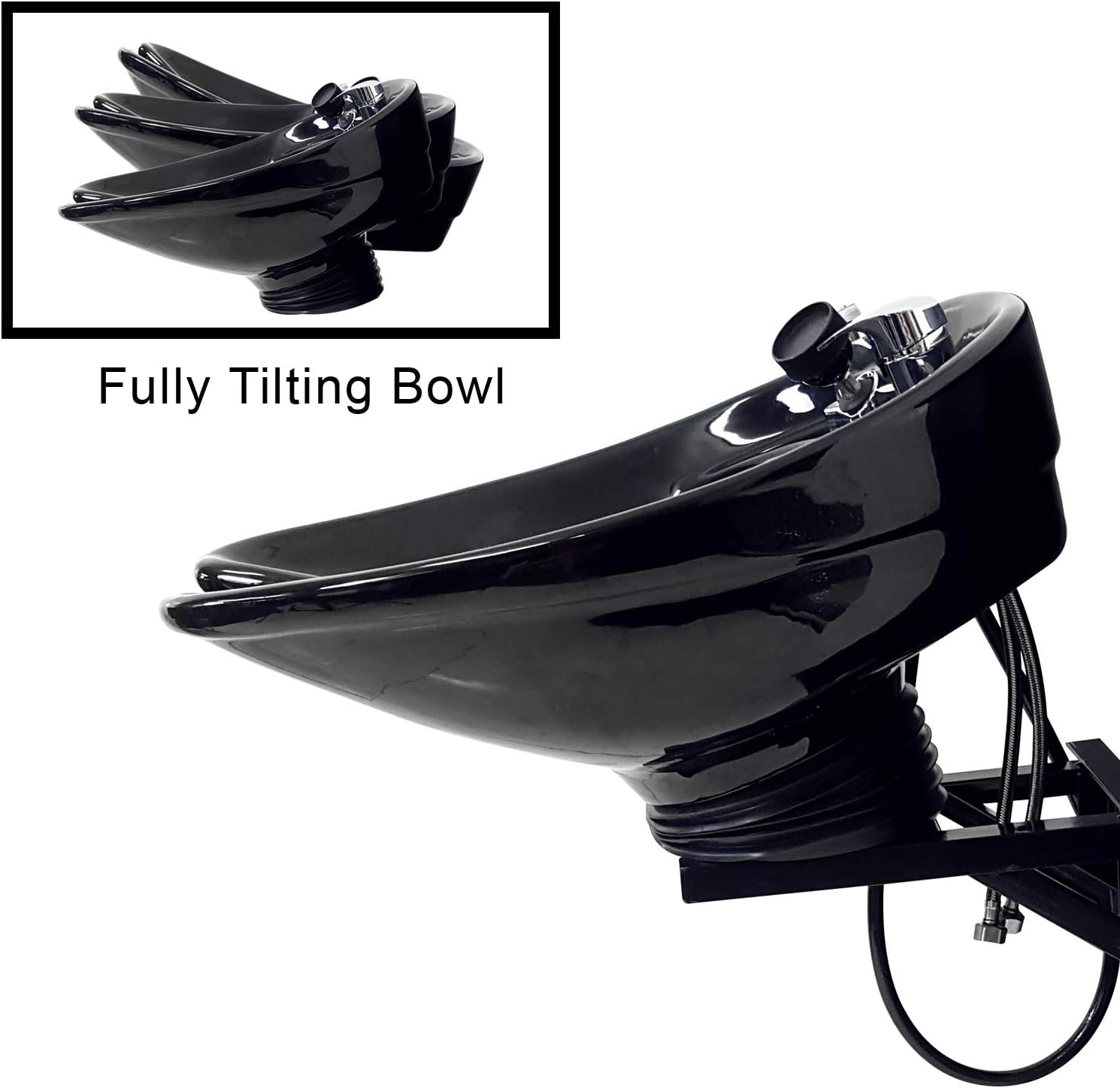
A shampoo bowl — the basin at your backbar station where clients have their hair wet, conditioned, and treated — sounds like a straightforward purchase. It holds water. It drains. Done. But the material the bowl is made from, porcelain or ceramic, has a real downstream effect on client comfort, long-term durability, your cleaning routine, and what your salon looks like at the five-year mark. If you’re mid-buildout or spec’ing a booth renovation right now, this is one of those decisions where getting it wrong costs you twice: once at purchase, and again when you’re replacing or refinishing the bowl earlier than you planned. This guide walks through how the two materials compare, what the honest price ranges look like, which stations are worth the investment, and — at the end — a plain “if this, then that” decision rule so you can move forward with confidence.
| EDITOR'S PICK[BarberPub Backwash Shampoo Stat…](https://www.amazon.com/dp/B0CW676L8N?tag=greenflower20-20) | Mid-tier[Pibbs Heavy-Duty Black Porcelai…](https://www.amazon.com/dp/B004V5QX38?tag=greenflower20-20) | Budget pick[Buy-Rite Deep Acrylic Shampoo B…](https://www.amazon.com/dp/B004HYXCH8?tag=greenflower20-20) | |
|---|---|---|---|
| Material | Porcelain Ceramic | Porcelain | Acrylic |
| Mount Type | Station | Wall-mounted | — |
| Chair Included | ✓ | ✗ | ✗ |
| Dimensions | — | — | 18.75x19.25x9.5 in |
| Faucet Included | — | ✓ | — |
| Spray Hose | — | ✓ | ✓ |
| Price | $709.90 | $299.00 | $183.00 |
| See on Amazon → | See on Amazon → | See on Amazon → |
Porcelain vs. Ceramic: What You’re Actually Comparing
Both porcelain and ceramic are fired-clay materials, which is why they get used interchangeably in manufacturer listings and showroom conversations. But the distinction matters practically.
Ceramic is a broad category of clay-based material fired at relatively lower temperatures. It’s porous unless sealed with a glaze, which is why all salon-grade ceramic bowls are glazed. The glaze is what you’re interacting with — it’s what gives the bowl its finish, its resistance to staining, and its visual sheen. The substrate underneath is softer.
Porcelain is a denser, higher-fired version of ceramic — technically a subset of it, but engineered to be less porous and more durable. The glaze and substrate fuse more completely during firing, which means the material resists chipping and cracking better, holds its color longer, and is generally easier to clean without abrasive products that can erode the glaze over time. Think of porcelain as ceramic with tighter tolerances.
In salon equipment specifically, Beauty Launch Pad’s shampoo bowl buyer’s guide distinguishes the two this way: ceramic bowls are typically appropriate for lower-traffic applications or price-sensitive buildouts, while porcelain bowls are the default recommendation for full-time professional environments with daily client volume.
The practical consequence: in a salon running 15–25 color services a week, the chemical exposure — color, bleach, toners, clarifying shampoos — is relentless. Porcelain’s denser surface is less reactive to repeated chemical contact. Ceramic glazes can develop micro-crazing (hairline surface cracks in the glaze, not structural failures) faster under these conditions.
By the Numbers
| Ceramic (entry-mid) | Porcelain (mid-premium) | |
|---|---|---|
| Typical price range | $180–$480 per unit | $420–$1,200+ per unit |
| Expected service life | 5–10 years w/ proper care | 12–20+ years |
| Avg. cost-per-year (unit only) | ~$48–$96 | ~$35–$100 |
| Color stain risk | Moderate (glaze dependent) | Low (denser substrate) |
| Repair/refinish availability | Limited | Broader (professional tub refinishing) |
Ranges reflect 2025–2026 U.S. market pricing across authorized distributors; single-unit, uninstalled. Installation and plumbing are separate.
The cost-per-year math is the piece most buyers skip. A $280 ceramic bowl that needs replacement or refinishing at year six ends up costing more per year than an $800 porcelain unit running clean through year fifteen. Salon Today Magazine’s equipment ROI coverage consistently surfaces this pattern — the premium material pays back in the middle years, not year one.
What to Evaluate Before You Buy
Material Grade and Glaze Quality
Not all porcelain is equal, and “porcelain” on a spec sheet doesn’t guarantee the same density as a plumbing-grade vitreous china bowl. When you’re comparing options, look for the term vitreous china or vitrified porcelain in the product specification — those terms indicate the glaze and substrate have fully fused, which is the benchmark for professional durability.
American Salon’s coverage of backbar design notes that the most common sourcing mistake in mid-range buildouts is buying a bowl listed as “porcelain” that’s actually a ceramic substrate with a porcelain-finish glaze — a meaningful quality distinction that doesn’t show up in a showroom photo.
Authorized distributors — Kaemark, Minerva Beauty, DIR Salon Furniture — will have full spec sheets on request. If a seller can’t produce a spec sheet, that’s a signal.
Bowl Size and Depth
This matters more than material for ergonomics. Standard shampoo bowls run roughly 20–24 inches in length. Deeper bowls (8–10 inches) give more splash containment and are generally preferred for longer hair or high-volume blowout-forward salons. Shallower bowls (5–7 inches) are easier for clients to recline into comfortably, especially for neck-heavy services.
If you’re running a color-focused book where clients are at the bowl for extended treatments — glosses, toners, Olaplex-style bond systems — depth and client neck comfort will drive return satisfaction more than the bowl’s visual finish.
Neck Rest and Chair Compatibility
The shampoo bowl doesn’t exist in isolation. It mounts to a shampoo unit — the chair-and-basin combination — and the neck cutout of the bowl needs to be compatible with the chair’s recline angle. Pibbs, Takara Belmont, and Belvedere each have proprietary bowl profiles on some of their units. If you’re speccing a specific chair brand, confirm bowl compatibility before purchasing separately.
Professional Beauty UK’s 2025 hard goods investment piece flagged mismatched bowl-to-chair recline as one of the most common installation issues in independent salon buildouts — it’s a fixable problem, but it costs time and sometimes requires additional plumbing adjustments.
Drain Configuration and Plumbing Rough-In
Porcelain and ceramic bowls both come in center-drain and rear-drain configurations. Your rough-in (the existing plumbing location in your floor or wall) determines which you need — you can’t swap drain positions without a licensed plumber and, in most jurisdictions, a permit. If you’re working with an existing rough-in, measure before you purchase. If you’re starting from scratch on a new build, plan the rough-in around your preferred bowl configuration, not the other way around.
Modern Salon’s buildout budgeting guide recommends setting aside $300–$600 per station for plumbing rough-in work even in straightforward installations — more if you’re moving a drain location or adding stations where no backbar plumbing previously existed.
Price Ladder: What Each Tier Gets You
Entry level ($180–$350): Glazed ceramic bowls, typically from import-market supply chains. Functional, acceptable surface quality, limited warranty coverage (often 90 days to one year on the bowl itself). Appropriate for a cosmetology student building a home practice space or a low-volume booth renter in a salon that already has shampoo infrastructure — you’re adding a bowl, not anchoring a buildout.
Mid-range ($350–$700): Where porcelain enters the conversation seriously. This range includes genuine vitrified porcelain bowls from established salon equipment brands, better glaze consistency, and manufacturer warranties in the 2–5 year range. For an independent booth renter building a full station or a salon owner doing a 2–4 chair refresh, this is the realistic target range. The ROI math closes here.
Premium ($700–$1,200+): Full-spec porcelain bowls, often bundled with integrated shampoo units from Takara Belmont, Belvedere, or Maletti. At this tier you’re purchasing engineered bowl-to-chair fitment, better neck rest ergonomics, and the aesthetic finish quality that reads in client photos — which matters if Instagram and Google imagery are part of your client acquisition. A Takara Belmont shampoo unit in this range is a recognized anchor piece that signals investment to a prospective client walking through the door.
Luxury/architectural ($1,200+): Custom bowl fabrications, integrated into bespoke furniture collections. This tier is relevant for flagship multi-chair buildouts where the shampoo station is a designed element of a specific aesthetic — not just a functional backbar. Maletti’s integrated shampoo furniture collections operate here.
The Maintenance Reality No One Talks About in the Showroom
Porcelain and ceramic bowls both require the same basic maintenance discipline: rinse after every client, don’t let color or bleach sit on the surface, and use non-abrasive cleaners. The difference shows up at the edges of that routine.
Ceramic glaze is more vulnerable to abrasive cleaning products — the kind of products you might reach for when a color stain doesn’t come off easily. Using a gritty cleaner on a ceramic bowl to remove a stubborn stain can micro-etch the glaze surface, which then becomes even harder to clean and more prone to future staining. It’s a compounding problem. Porcelain’s denser surface handles occasional abrasive contact better, though the best practice is the same: enzymatic or non-abrasive bowl cleaners, consistently applied.
For stain removal on porcelain specifically, owners across aggregated reviews report that a paste of baking soda and hydrogen peroxide, left for 10–15 minutes before rinsing, handles most color staining without glaze impact. For severe buildup, professional porcelain refinishing (the same service used for bathtub reglazing) can restore the surface — a $150–$300 option that extends a high-quality bowl’s life significantly. This option is less viable on lower-grade ceramic, where the substrate may not bond well with refinishing compounds.
If X, Then Y: The Decision Rule
This is the part most guides skip. Here it is plainly:
If you’re a booth renter at an established salon with existing shampoo infrastructure and you’re adding or replacing one bowl: buy mid-range ceramic or entry-level porcelain at the $250–$450 range. The station is shared infrastructure; optimizing heavily here before you own the space is over-investment.
If you’re a booth renter building a fully independent station — your own chair, your own shampoo unit, your own clientele — treat the shampoo bowl as part of a 5–10 year asset. Spend in the $500–$750 range for genuine vitrified porcelain. The cost-per-year math closes by year four.
If you’re a salon owner doing a 2–6 chair buildout or full interior refresh: Porcelain is the default. Budget $600–$1,000 per shampoo station (bowl + basic chair unit, uninstalled) as a baseline, and verify bowl-to-chair compatibility before purchasing components separately. Your shampoo stations are client-facing for every service — they earn that investment back in retention.
If you’re speccing a flagship multi-chair location or a luxury suite buildout where client experience is a positioning differentiator: integrated shampoo units from Takara Belmont or Maletti’s furniture collections are the appropriate tier. The bowl is inseparable from the aesthetic of the space. Budget accordingly — $1,200–$2,500+ per integrated station — and work with an authorized dealer who can provide installation support and warranty service.
In all cases: Confirm the seller is an authorized distributor. Gray-market shampoo bowls from non-authorized channels frequently arrive with voided manufacturer warranties and, in some cases, with plumbing fittings that don’t meet U.S. code standards. The $200 you save on a gray-market unit can cost $600 in a plumber’s correction and a warranty claim that goes nowhere.
The shampoo bowl is the one piece of equipment that touches every single client at your station. Getting the material right isn’t perfectionism — it’s the infrastructure math that pays quietly over a decade of services.